
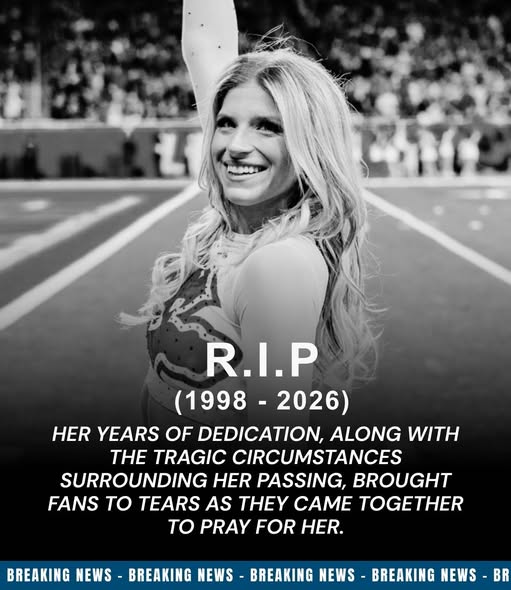
The Detroit Lions community is reeling after the sudden and heartbreaking death of a beloved longtime cheerleader whose radiant presence on the sidelines once symbolized unity, pride, and unwavering loyalty to a team and its fans.
At just 27 years old, she leaves behind a three-year-old child, grieving parents, stunned teammates, and a fan base now forced to confront how quickly joy can be replaced by devastating silence.
For years she stood under stadium lights through bitter cold and roaring victories, embodying spirit and resilience while thousands cheered, unaware of the private storms that may have been brewing beyond the field.
Her passing, reportedly following a painful family dispute, has ignited conversations that stretch far beyond sports, pushing uncomfortable questions about mental health, domestic conflict, and the unseen pressures young public figures quietly endure.
Social media erupted within hours of the news, transforming timelines into memorial walls filled with photographs, shared memories, candle emojis, and raw expressions of disbelief from fans who felt they knew her personally.
Teammates described her as relentlessly supportive, the kind of person who arrived early to rehearsals, stayed late to encourage rookies, and never allowed personal struggles to overshadow her commitment to the squad.
Yet behind every carefully rehearsed smile and perfectly timed routine, there exists a human being navigating complex relationships, expectations, and emotional burdens that rarely make headlines until tragedy forces them into view.
The heartbreak has intensified because her story reflects a broader societal contradiction, where young women are celebrated for their public brilliance while their private battles remain inconvenient, misunderstood, or tragically dismissed.
In Detroit, vigils have gathered outside the stadium gates, with fans placing jerseys, flowers, and handwritten notes beneath the towering logos that once framed her performances on game days.
Parents have brought their children to these gatherings, using the moment to explain loss, compassion, and the importance of speaking openly about feelings that too often go unheard until it is too late.
Her death has sparked fierce debate about how communities respond to signs of distress, and whether friends, family members, and institutions truly recognize the urgency of emotional conflict before it escalates.
Some voices online have demanded accountability from those closest to the dispute, while others caution against speculation, reminding the public that grief should not be weaponized into blame without verified understanding.
What remains undeniable is that a three-year-old child must now grow up without a mother whose laughter once echoed through locker rooms and whose embrace once calmed pregame nerves.
That image alone has shaken even the most stoic fans, confronting them with the fragile reality that behind every halftime routine stands a life far more intricate than a uniform and pom-poms.
Mental health advocates have stepped forward, urging the sports world to invest more deeply in confidential counseling services for performers who operate under constant scrutiny and relentless expectations.
The entertainment and athletic industries often glamorize strength while quietly stigmatizing vulnerability, creating environments where asking for help can feel like risking reputation, opportunity, or perceived resilience.
Her story now challenges those norms, forcing executives, coaches, and community leaders to examine whether support systems are proactive or merely reactive once tragedy strikes.
Many former cheerleaders have shared anonymous testimonies describing the intense balancing act between professional poise and personal turmoil, revealing a culture that sometimes prioritizes appearance over authentic well-being.
These testimonies are not accusations but reflections, offering insight into how easily emotional strain can be masked by glittering performances and applause that fade as soon as stadium lights dim.
The Lions organization released a statement expressing profound sorrow and solidarity with her family, emphasizing unity and compassion during a time when speculation threatens to overshadow remembrance.
Fans, however, are not satisfied with statements alone, as they call for tangible action such as expanded mental health resources, clearer crisis intervention pathways, and open forums for dialogue.
The debate has intensified across sports talk shows and online forums, where commentators question whether the culture of constant positivity discourages honest conversations about conflict and despair.
Some argue that tragedies like this expose deeper fractures in how society handles domestic disagreements, often minimizing warning signs until consequences become irreversible and devastating.
Others insist that personal disputes should remain private, warning against transforming intimate pain into public spectacle for clicks, shares, and algorithm-driven outrage.
Yet the digital age makes privacy increasingly fragile, and grief itself has become a collective experience amplified by trending hashtags and viral tributes.
Her smiling photographs continue circulating widely, each repost serving as both remembrance and reminder that real lives exist behind curated social media feeds.
In Detroit neighborhoods, conversations have shifted from game predictions to reflections on empathy, communication, and the urgent need to check on loved ones without waiting for visible breakdowns.
Faith leaders have incorporated her memory into sermons about reconciliation and listening, urging families to resolve conflicts before pride or anger eclipse compassion.
Educators have used the moment to discuss emotional literacy with students, emphasizing that strength includes acknowledging vulnerability rather than concealing it behind forced composure.
For many fans, the most haunting thought is imagining her final days overshadowed by tension rather than the roaring affirmation she once received from thousands in the stands.
That contrast between public adoration and private anguish has become the central theme of countless opinion pieces, each grappling with how communities can better bridge that divide.
Her teammates have pledged to honor her by supporting one another more intentionally, promising that no struggle within their ranks will be met with silence again.
The tragedy has also renewed scrutiny of how young parents navigate stress, especially when balancing demanding roles, financial pressures, and the expectations of being perpetually composed.
Advocates stress that seeking mediation, therapy, or crisis support during family disputes should be normalized rather than perceived as weakness or failure.
At its core, this loss forces an uncomfortable reflection on how quickly unresolved conflict can spiral beyond control, leaving permanent scars on children, partners, and entire communities.
Sports franchises often speak about family as metaphor, yet moments like this reveal that the metaphor carries real responsibility beyond slogans printed on merchandise.
If there is any enduring legacy to emerge from her untimely passing, supporters hope it will be a cultural shift toward earlier intervention and deeper empathy.
The Detroit Lions community now stands united not only in mourning but in a shared determination to ensure that her story becomes a catalyst rather than a fleeting headline.
As the season moves forward and cheers inevitably rise again, her absence will linger as a solemn reminder that behind every performance beats a heart deserving protection and understanding.
In remembering her spirit, energy, and devotion, fans are left with a challenge that extends beyond the stadium: to listen more closely, love more fiercely, and refuse to let silent suffering remain unseen.